 ⌕ Zoom
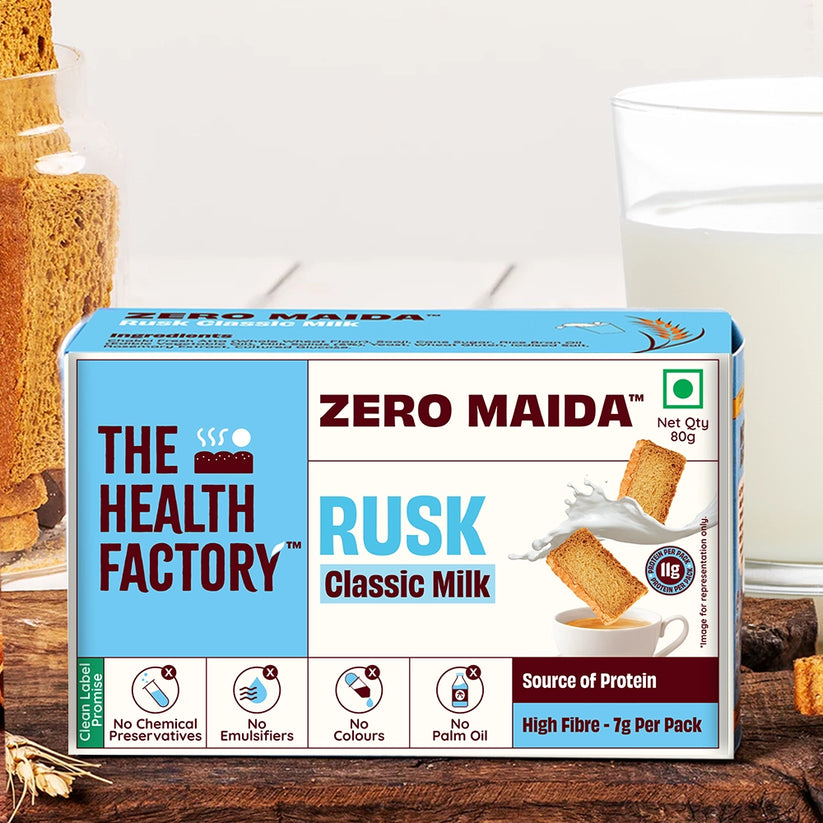
Photo from the brand's official website
Each ingredient gets a tier from our researched dossier. The list sorts worst-first; the donut summarises the distribution. Tap any ingredient for its full dossier.
We treat each claim as a question — does what’s inside back it up? Tap a claim for the reasoning.
This product is marketed as a cleaner alternative to conventional rusk—positioning itself on the absence of maida, palm oil, emulsifiers, artificial colours, and chemical preservatives. Health-conscious urban consumers who snack on rusk with tea will find the whole wheat and fibre story broadly credible: per-pack fibre (~7.5g) and protein (~11.5g) figures check out against the label's own per-100g nutrition data. However, note that the top-level nutrition figures in the product record appear to be per-serving (16g) values, not per-100g—the actual per-100g numbers from raw label data (442 kcal, 14.4g protein, 480mg sodium, 9.8g added sugar) paint a more energy- and sodium-dense picture than the headline numbers suggest. Two natural preservatives (rosemary extract and cultured glucose) are used, which is honest 'clean-label' practice but still tips the product into NOVA 4 ultra-processed territory. The most useful takeaway: this is a meaningfully better rusk than maida-based alternatives, but it is still a processed, wheat-heavy, moderate-sodium snack—not suitable for gluten-intolerant individuals, and worth portion-controlling for diabetics and those watching sodium.
