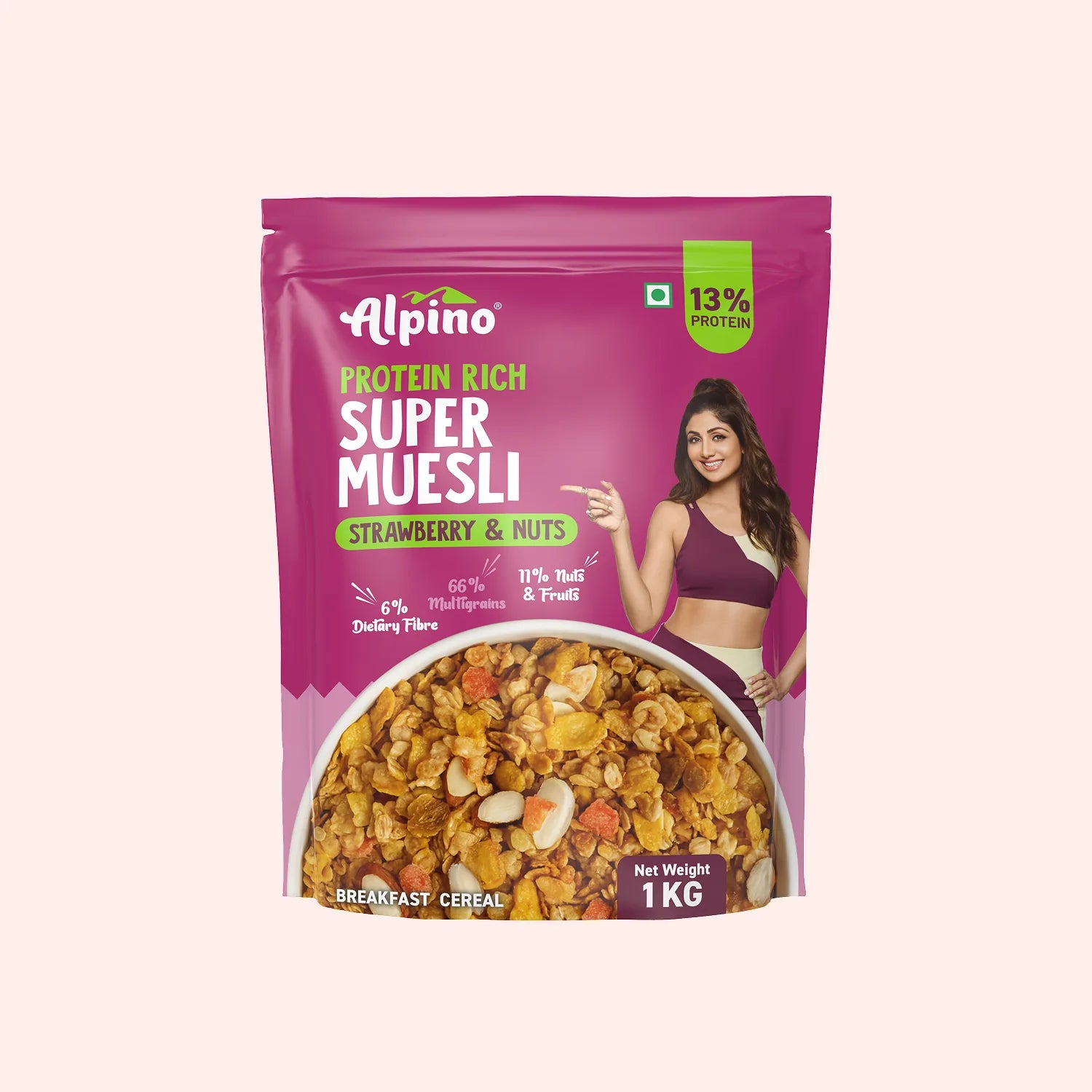
 ⌕ Zoom
Photo from the brand's official website
Each ingredient gets a tier from our researched dossier. The list sorts worst-first; the donut summarises the distribution. Tap any ingredient for its full dossier.
We treat each claim as a question — does what’s inside back it up? Tap a claim for the reasoning.
This muesli is marketed at fitness-conscious consumers — particularly women, given the brand ambassador imagery — looking for a high-protein breakfast option. The meaningful protein contribution (13 g/100 g) driven by texturised soya protein is a genuine positive, as is the 6 g dietary fibre. However, 12 g of added sugar per 100 g (per the nutrition panel) accounts for 75% of total sugar, making the 'protein-rich' positioning somewhat undercut by a significant sugar load; a 100 g serving already delivers 9.6% of the recommended daily added-sugar allowance. The inclusion of industrial soya protein isolate and the highly processed multigrain base (corn and rice flakes both carry high glycaemic indices) push this product into NOVA 4 territory. The most useful single thing a consumer should know: the protein claim is real, but so is the added-sugar content — pair it with plain yoghurt and keep portions to 40–50 g.
