Each ingredient gets a tier from our researched dossier. The list sorts worst-first; the donut summarises the distribution. Tap any ingredient for its full dossier.
Caution · 2 ingredients shown
Caution2 of 18 ingredients
Brown Rice ProteinCaution
FlaxseedsCaution
Cleared 15▾
Milk ProteinCleared
Sweetener BlendCleared
Oat BlendCleared
Chia SeedsCleared
FlaxseedCleared
AlmondsCleared
PotassiumCleared
LactaseCleared
Calcium PhosphateCleared
Potassium PropionateCleared
Magnesium OxideE530Cleared
ZincCleared
IodineCleared
Potassium IodideCleared
Potassium IodateCleared
Unknown 1▾
RajUnknown
Unknown
02 — Claims audit
Every label claim, fact-checked.
We treat each claim as a question — does what’s inside back it up? Tap a claim for the reasoning.
5/12
claims fully supported
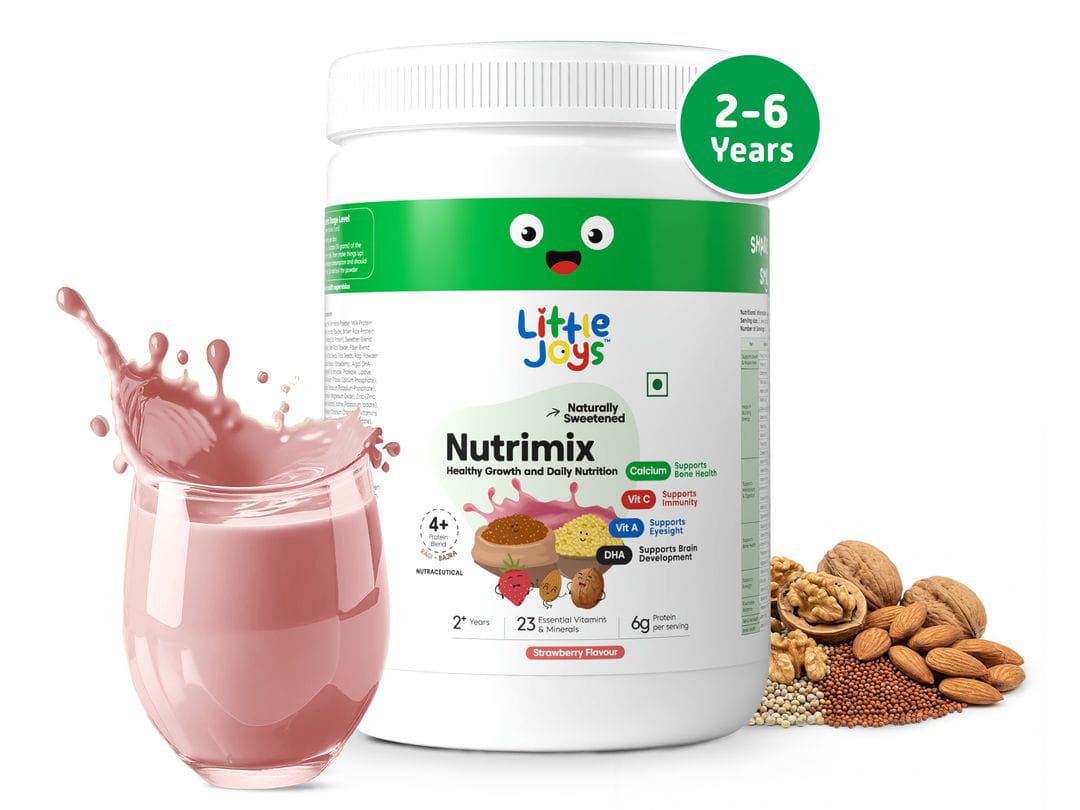
“Naturally Sweetened”unverified
Label confirms 0g refined added sugar and 11.9g unrefined added sugars per serving, suggesting natural sweetener sources; however, the 'Sweetener Blend' ingredient is listed without specifying its constituent sweeteners, leaving open the possibility of artificial components.
“Healthy Growth and Daily Nutrition”unverified
No clinical evidence or standardised growth outcome data is provided; the product contributes meaningful micronutrients but also contains ingredients with child-specific safety concerns (arsenic in brown rice protein, cyanogenic glycosides in flaxseeds).
“4+ Protein Blend (Bajra)”true
Extra information confirms '4+ Protein Blend including Bajra (pearl millet)'; ingredient list identifies milk protein, brown rice protein, oat blend, flaxseeds, chia seeds, and almonds — multiple protein-contributing sources are clearly present.
“23 Essential Vitamins & Minerals”unverified
Only Vitamin A, Vitamin D3, Calcium, and references to Vitamin C and DHA are confirmed in the available nutrition and extra information panels; a full panel of 23 vitamins and minerals is not provided in any of the four data sources.
“6g Protein per serving”true
Extra information explicitly confirms 6g protein per 34g serving, consistent with the nutrition data showing 6g protein per 100g × 0.34 serving correction being consistent at the per-serving level as stated.
“Supports Bone Health (Calcium)”true
Calcium is present at 176mg per serving (27.08% RDA) alongside Vitamin D3 at 100% RDA, both of which are directly relevant to bone mineralisation.
“Supports Immunity (Vitamin C)”unverified
Vitamin C is listed in keyNutrients on the label, but no quantity, RDA percentage, or confirmed mg amount is present in the nutrition or vitamins RDA panels provided.
“Supports Eyesight (Vitamin A)”true
Vitamin A is confirmed at 390 mcg per serving (61.90% RDA), a meaningful dose with established relevance to visual function.
“Supports Brain Development (DHA)”unverified
DHA is listed among keyNutrients on the front panel but no DHA quantity, source ingredient, or RDA percentage appears in any of the four data sources; the ingredient list does not include a DHA-specific ingredient.
“2+ Years”misleading
The product is positioned for children aged 2–6 years, but brown rice protein carries EFSA-documented elevated inorganic arsenic exposure for young children, and flaxseeds contain cyanogenic glycosides that may approach the Acute Reference Dose at the 95th-percentile intake level for children — making the blanket '2+ Years' positioning potentially understating the need for medical supervision.
“Nutraceutical”unverified
The product category is listed as 'Nutraceutical' and 'supplement', but no FSSAI licence number is provided to confirm regulatory registration under India's nutraceutical framework.
“No Added Refined Sugar”true
Label data explicitly states 'Added Sugars (Refined): 0g per serving', confirmed across the nutrition panel and caveats section.
03 — The fuller picture
Read the whole thing if a one-line verdict isn’t enough.
What’s in favour, and what’s working against it
In favour
100% RDA Vitamin D3 per serving — strong for bone and immune health
61.9% RDA Vitamin A per serving — meaningful eyesight and immunity support
27% RDA Calcium per serving — supports growing bones
Zero trans fat and very low saturated fat
No added refined sugars confirmed on label
Lactase enzyme included to aid lactose digestion
Working against
NOVA 4 ultra-processed: contains preservative and sweetener blend additives
11.9g unrefined added sugar per serving (24% of adult unrefined sugar RDA)
Brown rice protein: elevated inorganic arsenic risk for young children (EFSA)
Flaxseeds: cyanogenic glycoside content may approach ARfD at 95th-percentile child intake
Unknown ingredient 'raj' — identity, tier, and safety profile unverifiable
No FSSAI licence number provided despite nutraceutical category claim
Who should approach with care
Infants — Multiple ingredients are contraindicated for infants: flaxseeds and brown rice protein pose cyanogenic glycoside and arsenic risks respectively at infant body weights, the sweetener blend is not recommended for any infant by regulatory bodies, and iodised salt / potassium iodide should not be added to infant foods per FSSAI and EFSA guidance.
Children — Despite being targeted at 2–6 year olds, EFSA data show children at the 95th percentile of flaxseed consumption may exceed the cyanogenic glycoside ARfD, and brown rice protein carries elevated inorganic arsenic exposure disproportionate to children's lower body weight; paediatric supervision is strongly recommended.
Kidney Disease — Multiple ingredients including potassium (and its salts), magnesium oxide, calcium phosphate, and concentrated protein isolates collectively impose a significant renal mineral and nitrogen load that is contraindicated in chronic kidney disease without medical supervision.
Phenylketonuria — If the sweetener blend contains aspartame — a common blend component — it will metabolise to phenylalanine, which individuals with PKU cannot safely metabolise; the blend's composition is not disclosed, and the mandatory PKU warning is not confirmed on the label.
Thyroid Disease — Flaxseed phytoestrogens (lignans) may interfere with thyroid hormone metabolism, and both potassium iodide and potassium iodate provide supplemental iodine that can trigger or worsen autoimmune thyroid conditions such as Hashimoto's thyroiditis or Graves' disease.
Pregnancy — Flaxseed lignans exert phytoestrogenic effects and cyanogenic glycoside risks are elevated; the sweetener blend's composition is unknown; and iodine from multiple sources (potassium iodide, potassium iodate) may exceed the safe upper threshold for pregnant women without clinical oversight.
Lactation — Safety of flaxseed supplementation during breastfeeding is not well established (NCCIH), and repeat high-dose potassium iodide raises specific safety concerns for lactating women flagged in FDA guidance on thyroid-blocking agents.
Nut Allergy — Almonds are a globally recognised priority tree nut allergen (FAO/WHO 2022) and chia seeds have been flagged by EFSA for cross-reactive allergenicity with seeds and nuts; individuals with nut or seed allergies should avoid this product.
Ibs — Oat blend (beta-glucan), flaxseeds (insoluble fibre), and magnesium oxide (osmotic laxative effect) can collectively exacerbate bloating, altered bowel habits, and cramping in individuals with irritable bowel syndrome.
Ibd — Whole flaxseeds' high insoluble fibre content may aggravate bowel inflammation or obstruction symptoms during IBD flares, and magnesium oxide's mild alkalising and osmotic action may further irritate inflamed gastrointestinal mucosa.
Diabetes — The sweetener blend's composition is undisclosed and FSSAI has stated non-sugar sweetener blends are not recommended as a means of glycaemic control; the product also contributes 11.9g unrefined added sugars per serving.
Heart Disease — Patients on potassium-sparing diuretics or ACE inhibitors may be at risk of hyperkalemia from the cumulative potassium load (potassium propionate, potassium iodide, potassium iodate), and high-dose calcium supplements carry conflicting evidence regarding cardiovascular risk per NIH ODS.
Hypertension — Iodised salt and potassium propionate contribute to sodium and potassium load respectively, and individuals managing blood pressure should be mindful of cumulative electrolyte intake from this product.
The full analysis
Nutrimix targets parents of toddlers and pre-schoolers seeking a fortified daily supplement drink; each 34g serving delivers 6g protein from a multi-source blend, meaningful doses of Vitamin A (62% RDA), Vitamin D3 (100% RDA), and Calcium (27% RDA), which are genuine positives for growing children. The product is classified NOVA 4 (ultra-processed) due to the presence of a sweetener blend additive and potassium propionate preservative. Two ingredients warrant particular parental attention: brown rice protein isolate carries documented inorganic arsenic exposure concerns for young children per EFSA, and flaxseeds contain cyanogenic glycosides that can approach or exceed the Acute Reference Dose at the 95th-percentile intake for children this age — making the cumulative safety of this formulation for its stated 2–6 year target group the most important question a parent should raise with a paediatrician before regular use.
Region
IN
Source
MANUAL
Analysis
v1
Independently researched
Nutrimix Strawberry Flavour · Little Joys | whatsinit
