 ⌕ Zoom
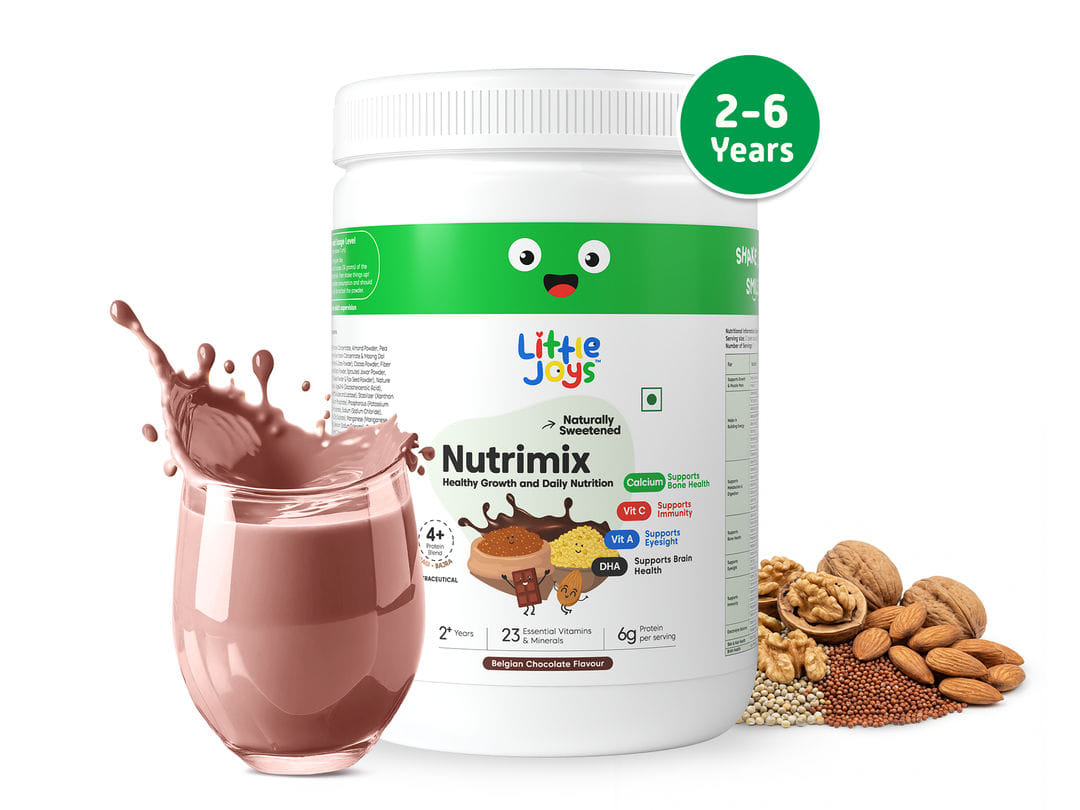
Photo from the brand's official website
Each ingredient gets a tier from our researched dossier. The list sorts worst-first; the donut summarises the distribution. Tap any ingredient for its full dossier.
We treat each claim as a question — does what’s inside back it up? Tap a claim for the reasoning.
This product is marketed at parents of toddlers and young children (2–6 years) as a wholesome, naturally sweetened daily nutrition powder with a reassuringly 'clean' ingredient list anchored in traditional grains and nuts. While it genuinely avoids refined sugar and delivers meaningful amounts of calcium, vitamin A, vitamin D3, and algal DHA, several concerns undercut the natural positioning: the product qualifies as NOVA 4 ultra-processed due to isolated additives (sodium ascorbate, stevia extract, magnesium gluconate, manganese gluconate, DHA algal powder, and natural flavours), EFSA warns that young children consuming stevia-sweetened products frequently may approach or exceed the ADI for steviol glycosides, cinnamon of unknown botanical type carries a coumarin risk for children if it is cassia variety, and Brazil nuts add a meaningful selenium load to a population group with low tolerable upper intake levels. Additionally, a notable data discrepancy exists: the nutrition panel reports 6g protein per 100g (implying ~2g per 34g serving), yet the label claims 6g protein per serving and the RDA% figure aligns with 6g — suggesting either an OCR transcription error in the per-100g figure or a labelling issue that warrants verification with the manufacturer. The single most useful insight for a curious parent: this product is more processed than its ingredient list implies, and its stevia and Brazil nut content deserve extra scrutiny for daily use in children under six.
