 ⌕ Zoom
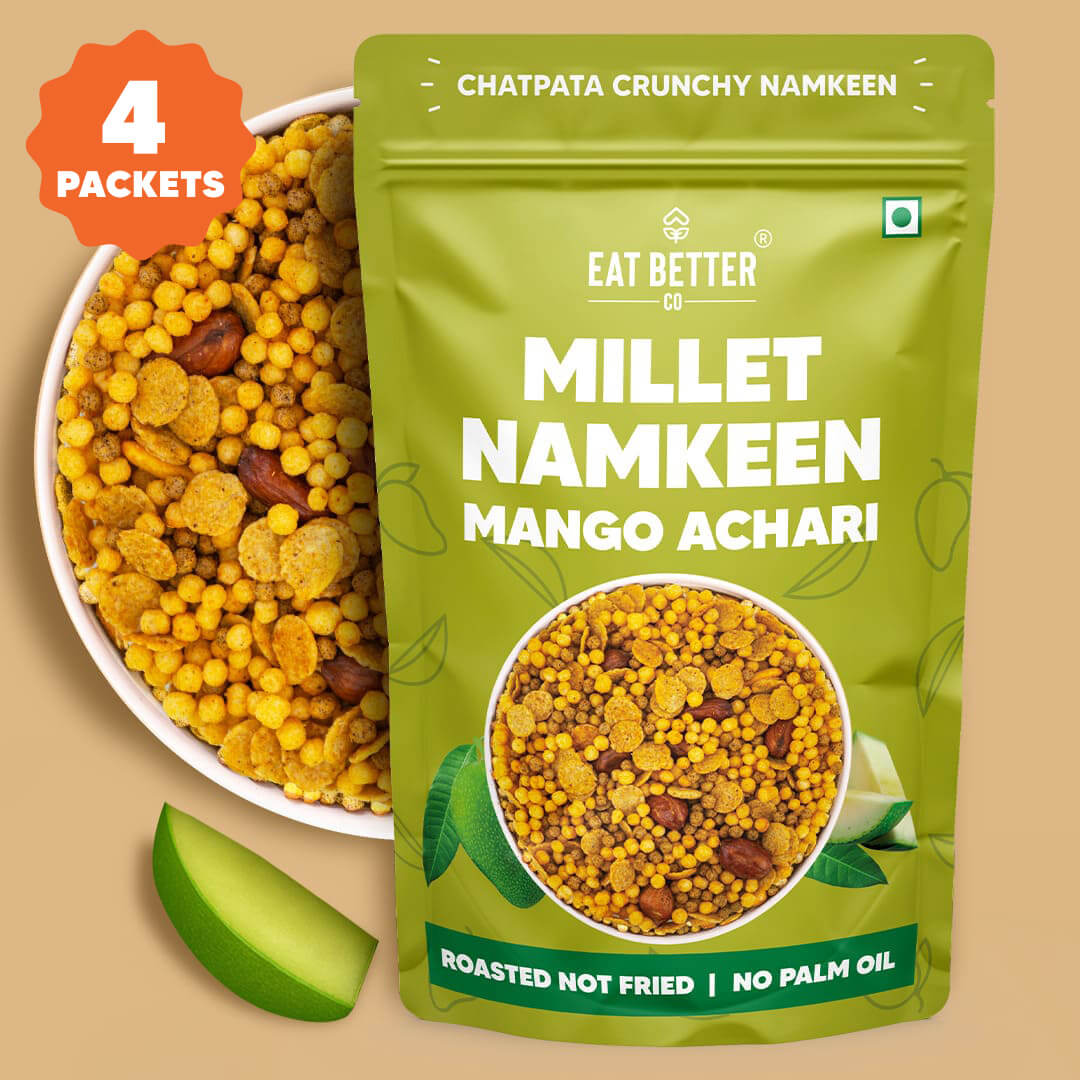
Photo from the brand's official website
Each ingredient gets a tier from our researched dossier. The list sorts worst-first; the donut summarises the distribution. Tap any ingredient for its full dossier.
We treat each claim as a question — does what’s inside back it up? Tap a claim for the reasoning.
This snack targets health-conscious Indian consumers looking for a millet-forward alternative to conventional chips or bhujia, and it does deliver meaningful fibre (10.2 g/100 g) and a respectable protein level (15 g/100 g) from its peanut and millet base, with no trans fat and no palm oil. However, the seasoning layer pushes it firmly into NOVA 4 territory through the inclusion of nucleotide flavour enhancers (INS 627, INS 631), anti-caking agent (INS 551), hydrolysed vegetable protein carrying a 3-MCPD carcinogen risk, and nature-identical flavouring substances — and the sodium content of 933 mg/100 g (nearly half an adult's daily limit in just 100 g) is a serious concern that undermines the 'nutritious' positioning. The single most useful takeaway: the millet base is genuinely better than maida chips, but the high-sodium seasoning system and ultra-processed additives mean this snack should be treated as an occasional treat rather than a daily health food.
