 ⌕ Zoom
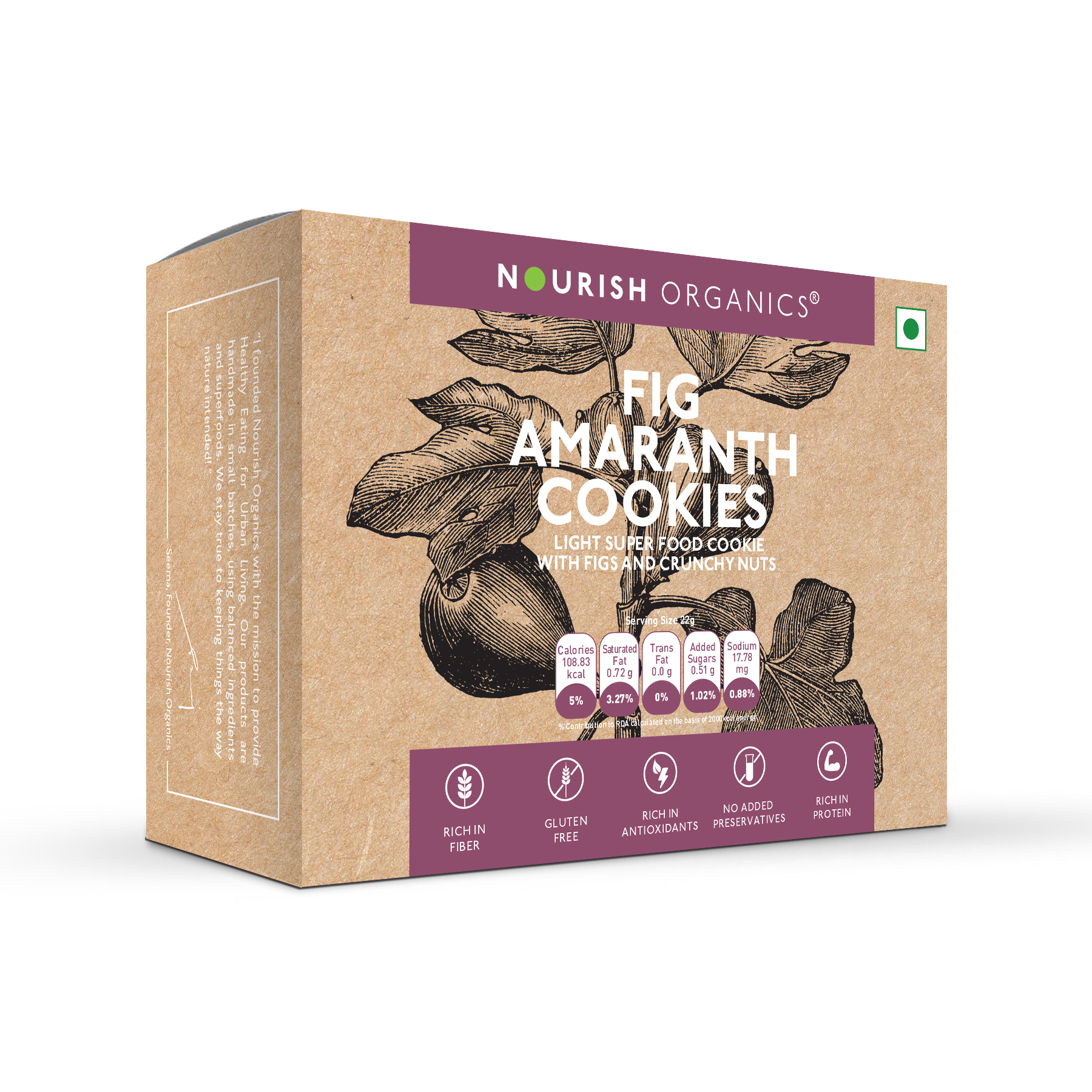
Photo from the brand's official website
Each ingredient gets a tier from our researched dossier. The list sorts worst-first; the donut summarises the distribution. Tap any ingredient for its full dossier.
Reviewed and added to SafeShelf — every ingredient checked against our safety, regulatory and processing standards.
We treat each claim as a question — does what’s inside back it up? Tap a claim for the reasoning.
These cookies are positioned as a 'superfood' snack for urban health-conscious consumers, and the ingredient list is genuinely cleaner than most packaged cookies — no synthetic colours, no artificial flavours, no emulsifiers, no chemical preservatives, and a respectable fibre content (~7.2 g/100 g). Two important flags, however, temper the health halo: first, the product contains both honey and brown sugar as sweeteners alongside naturally sugar-dense dates and raisins, pushing total sugars to ~25 g/100 g, which makes this a meaningful sugar source despite the 'natural' framing; second, the facility processes whole grains and peanuts, so the 'Gluten Free' claim carries a cross-contamination asterisk. One data-quality note: the NUTRITION block supplied to this renderer appears to contain per-serving (22 g) values mislabelled as per-100 g — the raw label data (494 kcal, 13.1 g protein, 7.2 g fibre per 100 g) is the credible figure and has been used throughout this analysis. The most useful single sentence: this is a genuinely additive-free baked snack worth choosing over ultra-processed alternatives, but its sugar load means it should be treated as an occasional treat, not a daily health food.
