 ⌕ Zoom
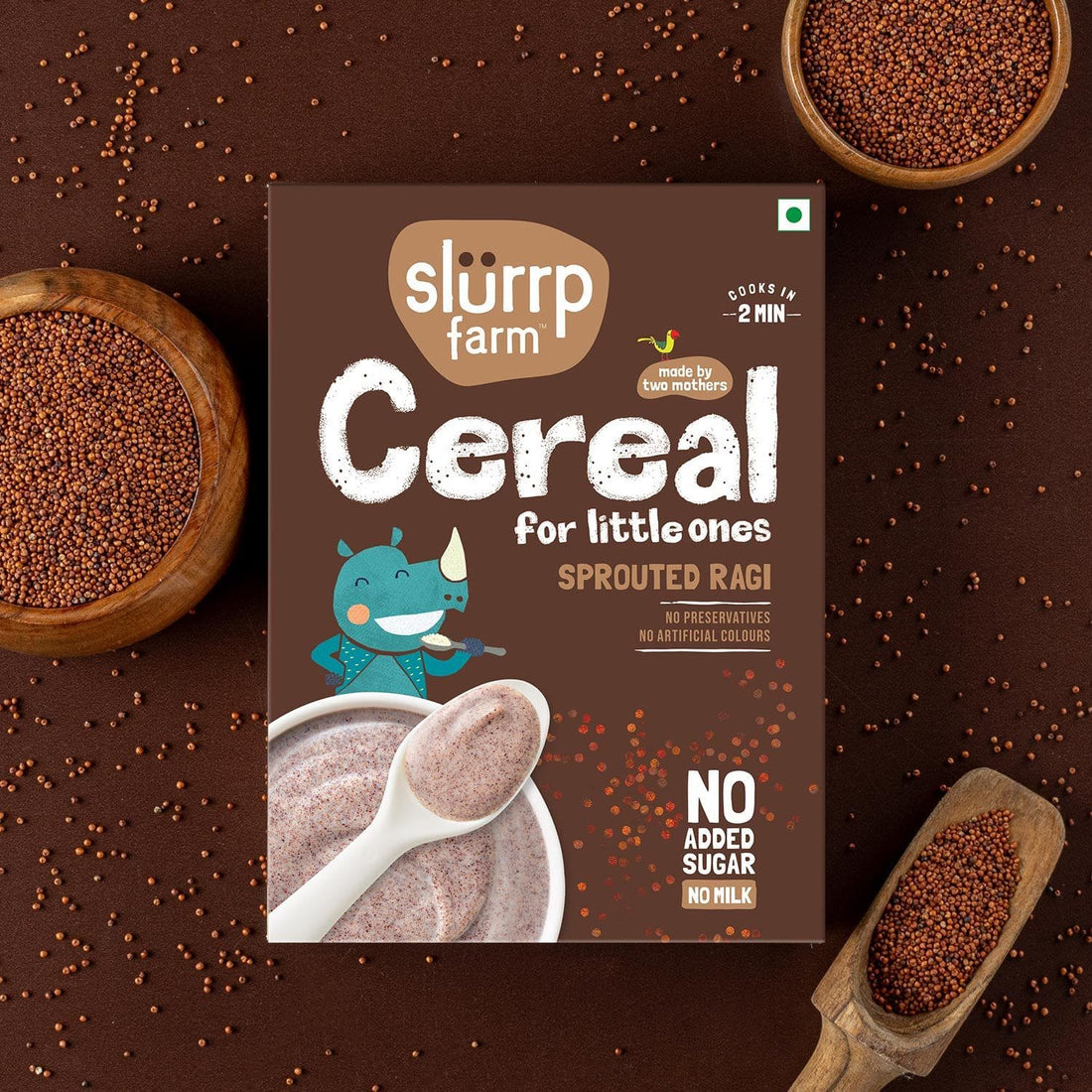
Photo from the brand's official website
Each ingredient gets a tier from our researched dossier. The list sorts worst-first; the donut summarises the distribution. Tap any ingredient for its full dossier.
Reviewed and added to SafeShelf — every ingredient checked against our safety, regulatory and processing standards.
We treat each claim as a question — does what’s inside back it up? Tap a claim for the reasoning.
Parents of infants and toddlers looking for a clean, additive-free weaning cereal will find this product hard to fault on ingredient quality — it is literally one ingredient: sprouted ragi. Sprouting reduces antinutrients (tannins and phytates) and improves mineral and phenolic bioavailability, making it more appropriate for young digestive systems than raw millet flour. There is, however, a notable data quality concern: the structured nutrition panel records 75.6 kcal per 100g, which is physically impossible for a dry cereal and almost certainly reflects per-serving (20g) values entered in the wrong column; the raw label data (377.8 kcal/100g, 8.7g protein, 4.7g fibre) is internally consistent and should be trusted. Practically speaking, the most useful thing a parent can know is: consult your paediatrician before introducing this to infants under six months, but for older babies and toddlers it is one of the cleanest commercial weaning cereals available.
