 ⌕ Zoom
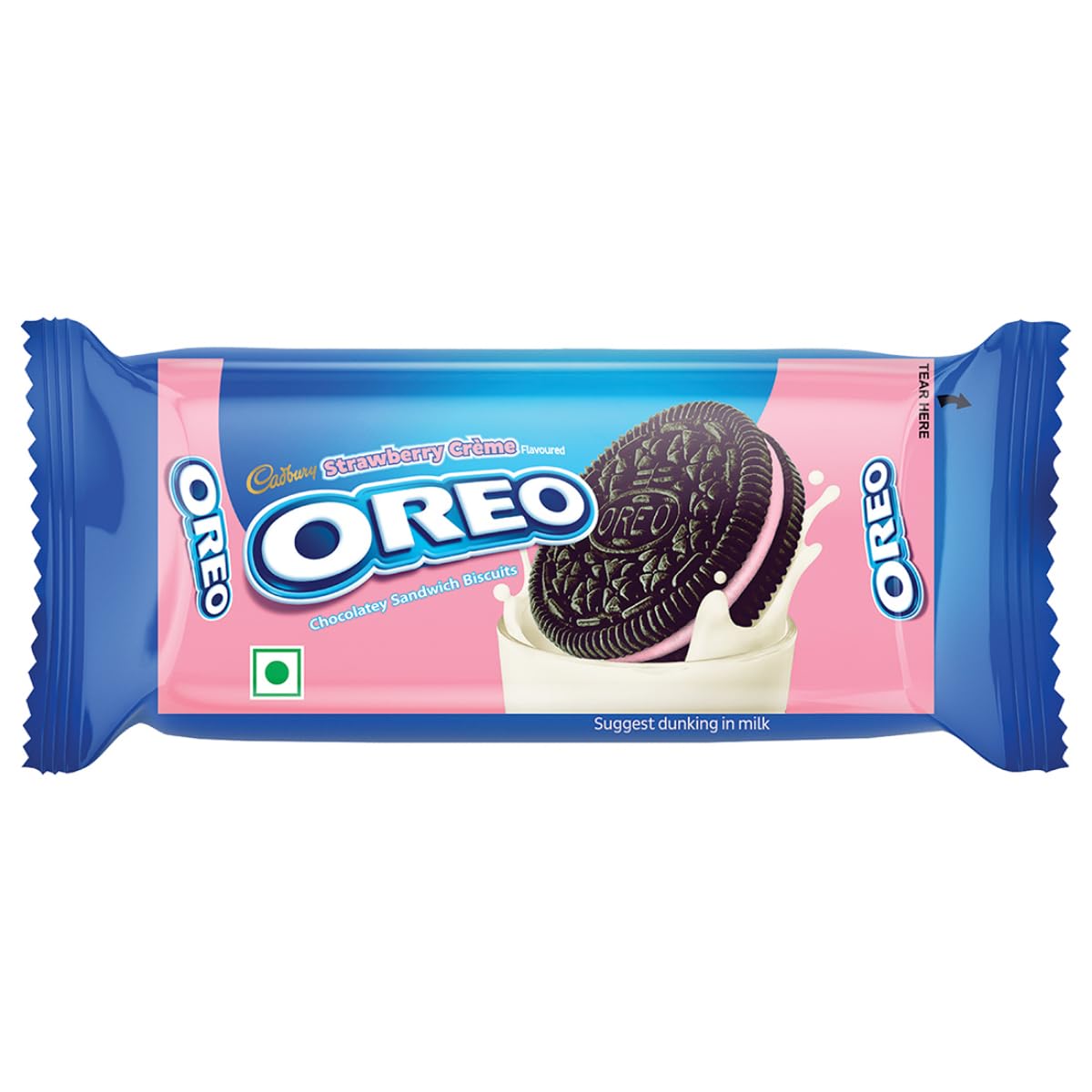
Photo from the brand's official website
Each ingredient gets a tier from our researched dossier. The list sorts worst-first; the donut summarises the distribution. Tap any ingredient for its full dossier.
We treat each claim as a question — does what’s inside back it up? Tap a claim for the reasoning.
This product is a small-pack snack biscuit aimed at children and young adults, trading on the globally recognised Oreo brand. The formulation is squarely ultra-processed: it combines refined wheat flour, two sources of palm oil, two forms of free sugar, synthetic leavening agents, a nature-identical strawberry flavouring, soy lecithin, and the synthetic azo colour Carmoisine (E122). The most urgent flag is E122 — banned in the United States, Norway, and under strict scrutiny in many markets — which carries an EU-mandatory label warning about its potential adverse effect on activity and attention in children, making it particularly ill-suited for the age group most likely to consume this product. Complete nutrition data was unavailable from the pack (OCR values all null), so quantitative sugar or sodium assessments cannot be made. The single most useful takeaway: this biscuit contains a synthetic dye (Carmoisine) that is banned in multiple countries and specifically cautioned against for children, the very demographic most drawn to it.