 ⌕ Zoom
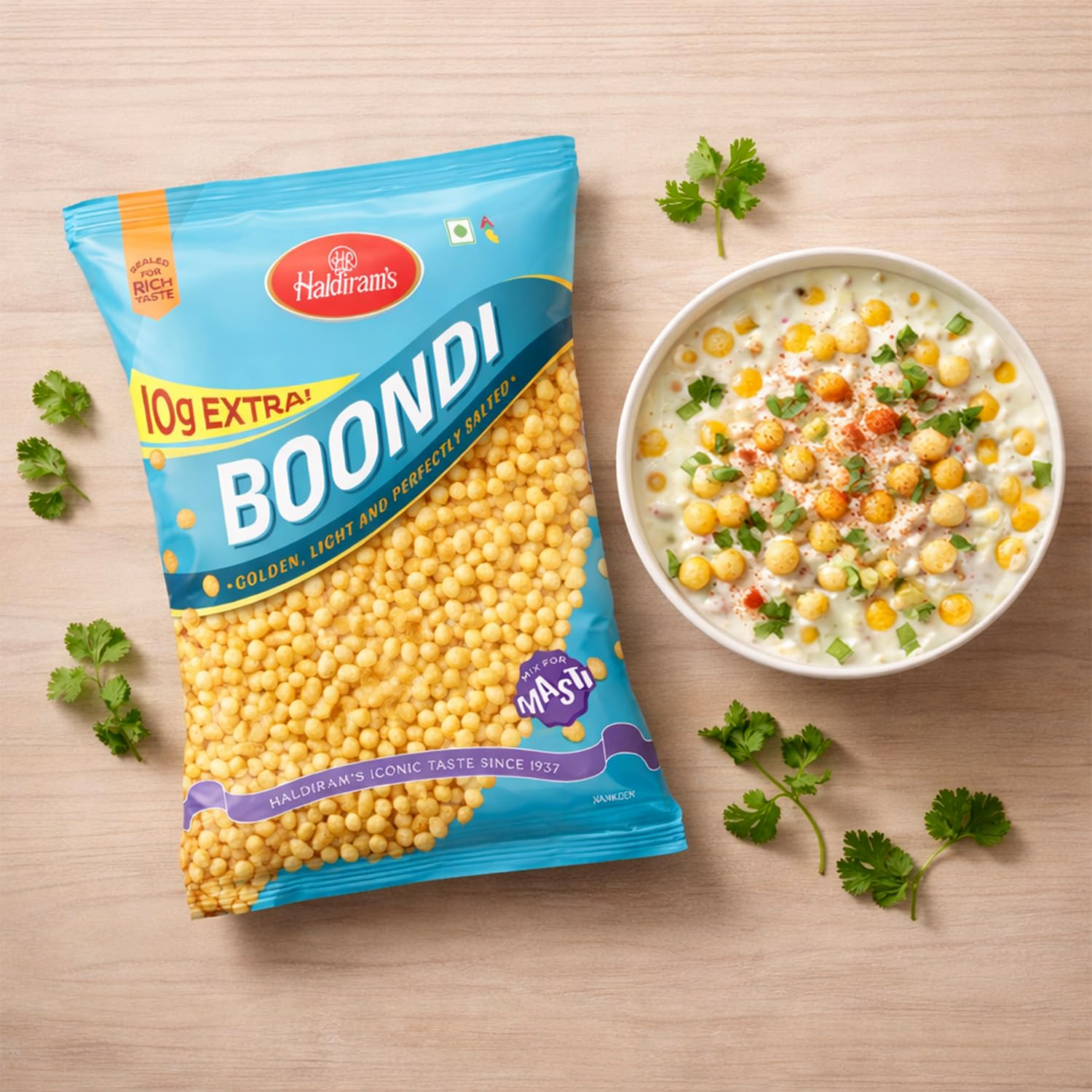
Photo from the brand's official website
Each ingredient gets a tier from our researched dossier. The list sorts worst-first; the donut summarises the distribution. Tap any ingredient for its full dossier.
We treat each claim as a question — does what’s inside back it up? Tap a claim for the reasoning.
Haldiram's Boondi is a popular pantry staple across Indian households, bought primarily as a standalone snack or as a topping for raita and chaat. Its ingredient list is refreshingly short — gram pulse, a five-oil blend, edible starch, rice powder, and iodised salt — with no artificial colours, flavours, preservatives, or emulsifiers, which is a genuine positive in the Indian namkeen category. However, the product is energy-dense (581 kcal/100g), very high in fat (40g/100g including 13.7g saturated fat and a detectable 0.1g trans fat), and carries 641mg sodium per 100g — meaning a modest 40g serving delivers more than a quarter of the recommended daily sodium intake. The most useful thing a curious consumer should know is: this is a comparatively clean-label fried snack, but the fat and sodium load means portion discipline matters, especially for those managing heart disease, hypertension, or kidney conditions.
