 ⌕ Zoom
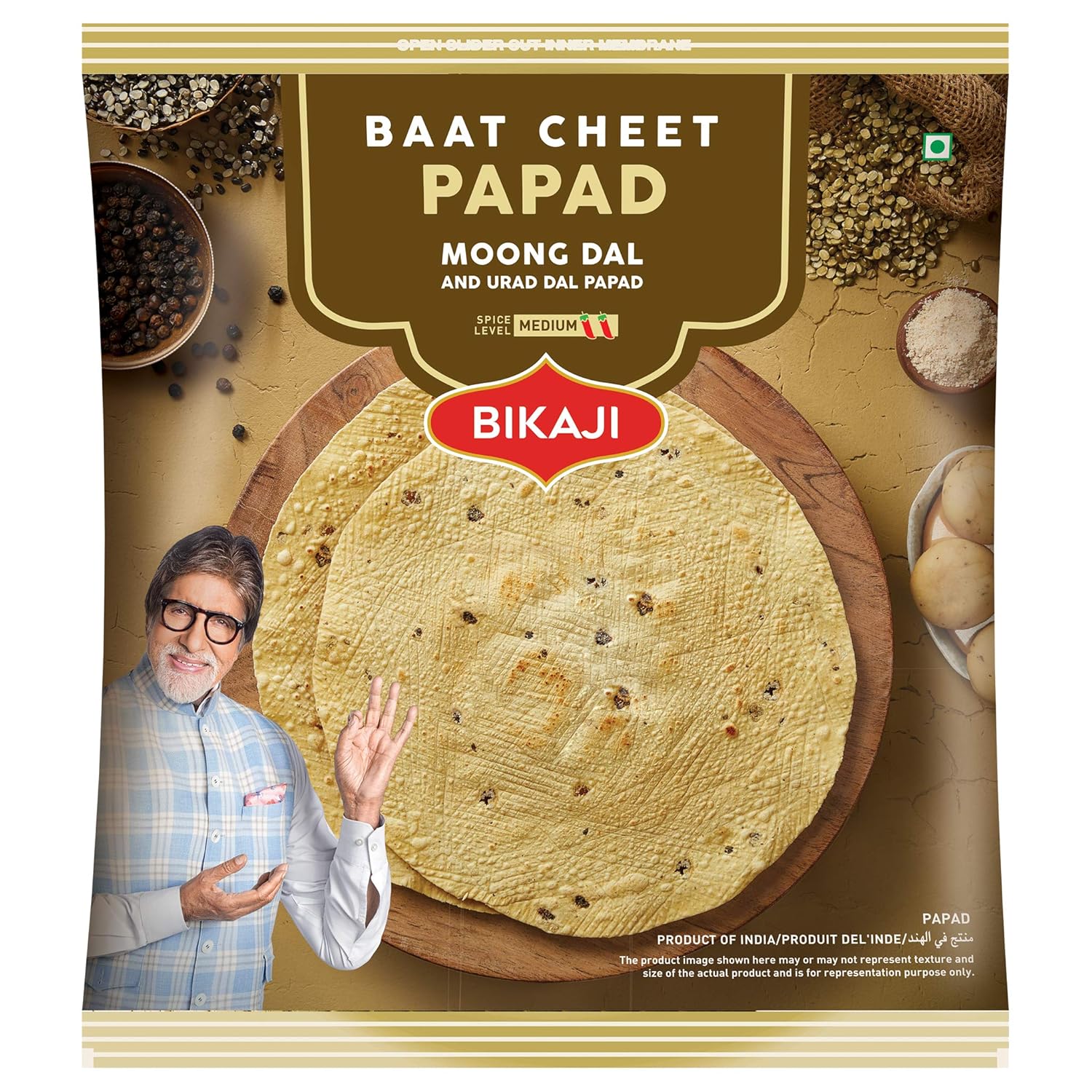
Photo from the brand's official website
Each ingredient gets a tier from our researched dossier. The list sorts worst-first; the donut summarises the distribution. Tap any ingredient for its full dossier.
Reviewed and added to SafeShelf — every ingredient checked against our safety, regulatory and processing standards.
We treat each claim as a question — does what’s inside back it up? Tap a claim for the reasoning.
This is a classic Indian papad — a product with deep traditional roots and a short, recognisable ingredient list dominated by two protein-rich legumes at 80% combined weight. Buyers are typically looking for a low-calorie, high-protein snack or meal accompaniment, and on those counts the raw papad delivers well: 20g protein and 9.2g fibre per 100g raw. The biggest flag for health-conscious consumers is sodium — the raw papad carries approximately 2,661mg sodium per 100g (452mg per single piece), primarily from iodized salt and crude sodium carbonate (saji), making portion control essential for anyone managing blood pressure or kidney health. People with peanut allergy must note the groundnut oil, and those with celiac disease or wheat allergy must note the wheat flour used in rolling. Pregnant women should be aware that asafoetida is present and carries documented caution signals. The most useful single sentence: this is one of India's healthiest traditional snack formats eaten raw or roasted, but its sodium load per serving is substantial enough to matter if you eat several pieces.
