 ⌕ Zoom
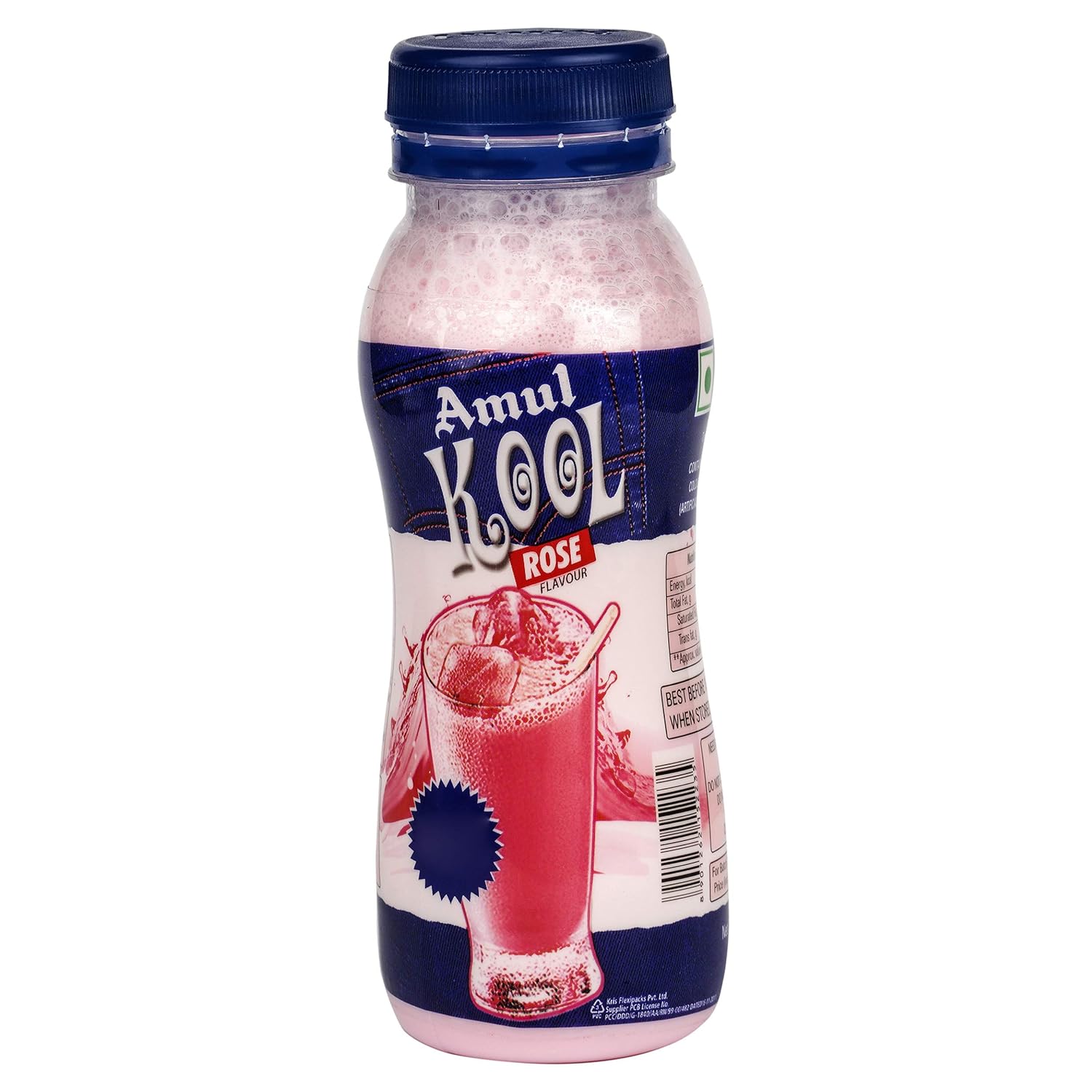
Photo from the brand's official website
Each ingredient gets a tier from our researched dossier. The list sorts worst-first; the donut summarises the distribution. Tap any ingredient for its full dossier.
We treat each claim as a question — does what’s inside back it up? Tap a claim for the reasoning.
Amul Kool Rose is a shelf-stable flavoured milk drink popular with children and on-the-go consumers who want a quick dairy hit without refrigeration. While it provides a reasonable amount of calcium (120 mg/100 g) and protein (3.2 g/100 g) from toned milk, it is undermined by two notable additives: erythrosine (E127), a synthetic dye whose food authorisation was revoked by the US FDA in January 2025 under the Delaney Clause citing carcinogenicity in animal studies and which carries a very low EFSA/JECFA ADI of 0.1 mg/kg body weight due to thyroid-disrupting effects, and artificial rose flavouring; added sugar contributes 8 g per 100 ml, and a small amount of trans fat (0.1 g/100 g) is present. The single most important thing a curious consumer—especially a parent buying this for a child—should know is that the pink colour comes from erythrosine (E127), a dye now banned for food use in the United States and flagged for thyroid toxicity, still permitted under FSSAI regulations but increasingly scrutinised globally.